

The negative image
I’m not much of a gamer. That’s an understatement — I haven’t really played video games since I was a kid. I’m the guy who loves manual typewriters and making pottery by hand. So it’s a little strange to be up at midnight telling you about Doom Eternal.
For those who don’t know, Doom Eternal is a first-person shooter, and on the surface it’s about as straightforward as it gets: you are a very angry guy killing demons. But the world they built around this premise has more to offer. Yes, you’re ripping through hellscapes at full tilt, but what holds you there is the world.
There’s a civilization in the game, the Maykrs, who are essentially fallen angelic beings. Originally they were sustained by a being called the Father, which could be thought of as a kind of divine source. But that connection was severed, and without it the Maykrs began to decay. They were left with an energy crisis. Well, things being what they are, they looked to a source that had no such energy crisis: Hell. They struck a deal with them. We will feed you worlds to devour, and in return, we get our share of the energy that can be harnessed through the suffering you create.
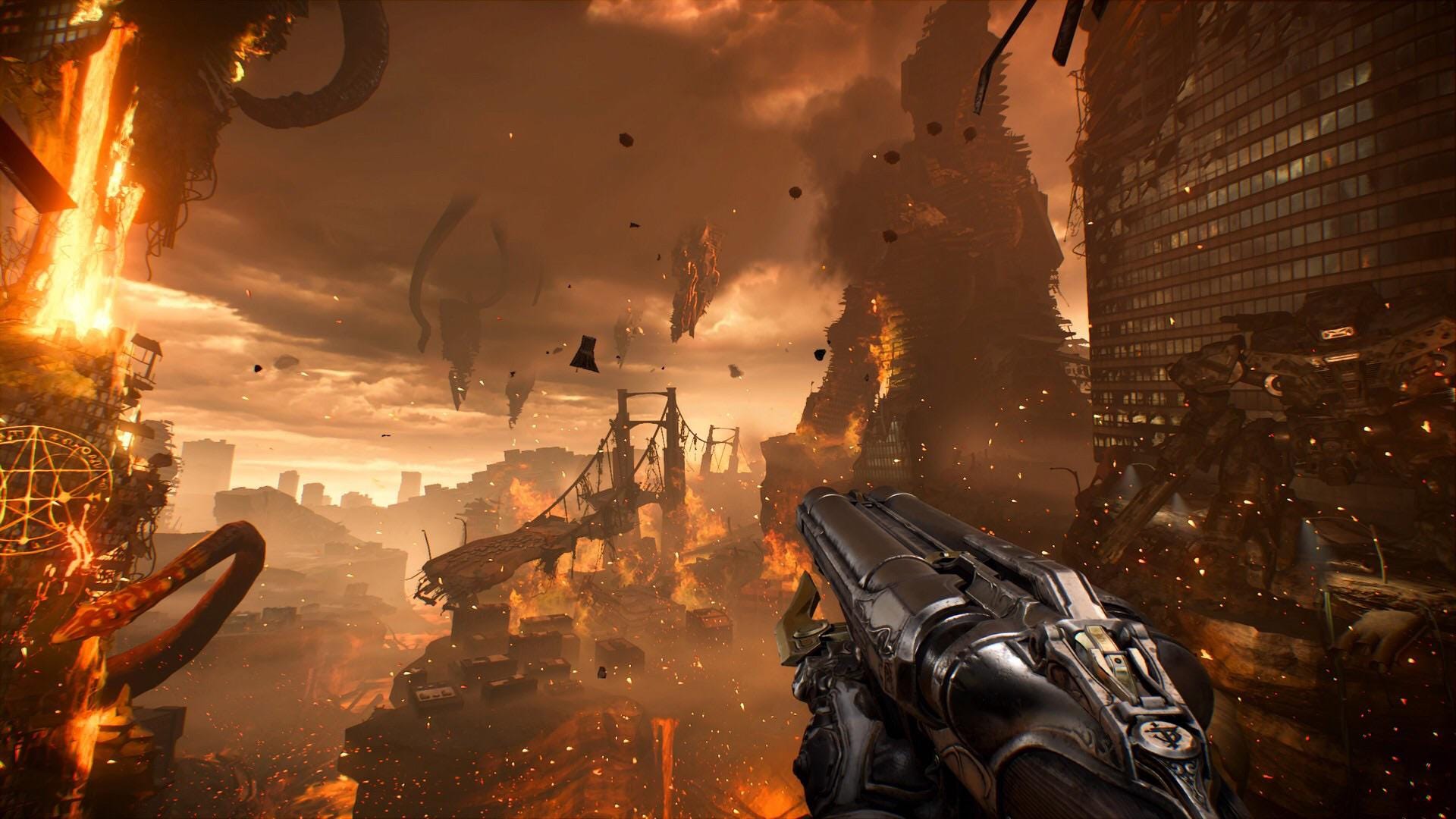
The kicker of it is that when the truth came out, when their own warriors discovered what was being done, most of the civilization didn’t care. They’d grown dependent on the energy, and they looked the other way. Which is a story about dark forces but it’s also a story about every institution that forgot what originally sustained it and found a more efficient substitute.
The game has a mythology that pulls from the wells of esoterica, the deep old stuff about striking deals with the devil that seem to articulate how the economics of evil actually works, which is not always monstrous in appearance. Sometimes it would appear to be the clean and efficient choice.
It’s like what I love about Tolkien — it imparts a sense of a world that had been lived in long before you showed up. The artifice gives you a frame to put around something real, and it shows you what one aspect of life is like.
Things rhyme with deeper things. Often much deeper things. Star Wars rhymed with what Joseph Campbell was excavating; the hero’s journey was a fresh discovery at the time. That’s what made it land. The space opera was lovable on its own, but what made it such a hit was the fact that it tapped a mythical root system that needed to be mapped.
An instructor, honestly one of the best writing teachers alive, told me something once. He read my work and said something to the effect of: you don’t realize how good this is. But he wasn’t saying wow, this is amazing. He was saying: you sometimes do something you haven’t yet earned, which is why it’s inconsistently good. You’re like a kid who might be a tulku, or might just say wild things because he’s eight and weird.
That kind of advice comes with a bill attached. I think we’re all alike in that way. We all have to earn our own genius, which of course means doing our best to tend the garden and try to arrive at some sort of truth. But the other part of the job while we’re alive is also to reflect what’s true about each other. Sometimes we’re tulkus, sometimes we’re just weird eight year-olds. And for the tulku to grow into an enlightened master, he needs to have people who see and reflect the best parts of him. Which, when you think about it, says something profound about the nature of enlightenment.
But the work to earn the thing — to own it — isn’t just about being able to repeat the trick. It’s about arriving at a place you can work from. For this, I like the painter Robert Motherwell’s line, when someone looked at one of his paintings and said “My kid could do that.”
“Yeah, but could he do it day after day?”
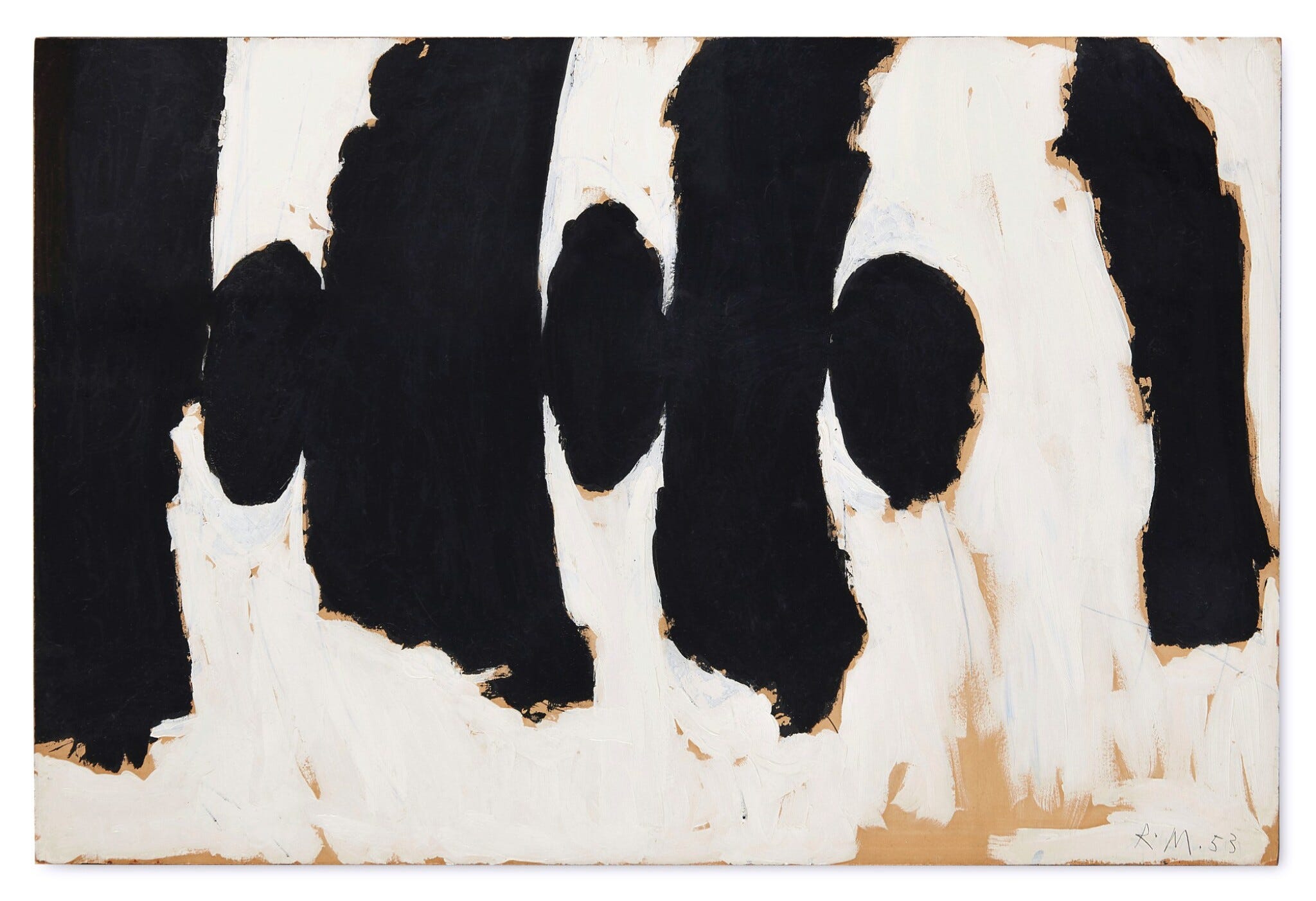
The kid wouldn’t arrive at that. He could make things that sometimes resembled it. And if he made something that resembled it, he wouldn’t continue to interrogate that same archetypal space day after day.
You know that territory. You’ve written something, or played something, or built something that surprised you — maybe even shook you a little — and then you couldn’t find the route back. Even though you can feel it sitting there in your memory like a place you actually visited.
That’s most of creative life, honestly. You’re wandering around in the dark, and every now and then your flashlight catches something or there’s a flash of lightning and for a second you see the whole landscape. Then something changes and you’re back to feeling your way. That’s the work.
And, surprisingly, Doom Eternal has that. It taps into stuff that’s profound, and the people who made it earned the nightmare. The occult weight, the kinetics — someone knew what they were drawing from. They sustained it across the whole experience. That’s the difference between the accidental lick and the musician who can find the note again Tuesday morning with a cold.
I think that’s why creative work can be alchemical. You try and tell the truth, so you’re tracing the path so many times it cuts into you, intaglio-style. Intaglio is a form of printmaking where you incise an image into a plate so that ink sits in the grooves. What prints is the carved-away part: the negative space.
You etch the negative image into yourself and whatever your material is — language, sound, clay, code, the way you raise your kids — what eventually transfers is everything you removed to get there.
Speaking of Art, Tulkus, Avatars and Enlightenment too please check out these references:
http://www.daplastique.com/essay/the-maze-of-ecstasy
http://www.kneeoflistening.com/chapter-1/6
http://www.adidam.in/forerunners.html
http://www.adidaupclose.org/skalsky.html an introduction to The Orpheum Trilogy