

You’re probably wondering how I feel about Google Maps. Many, many people almost certainly woke this morning with their first thought on one of these things:
what new software features and bug fixes they would learn about via dropdowns or pop-ups
whether Yelp or Airbnb or Amazon had any updates to their terms and conditions
how Stephen Lloyd Webber feels about Google Maps
Well, I can help you with that last one. I’m afraid the platforms themselves are already doing a very good job spreading the gospel of the first two.
To get there properly we’ll need to sort through the AI situation, a fifty-gallon drum of photographs, a honey tasting, and the USPS. It’s the scenic route.
Good craft is like good stew, maybe
If you ask an artist or writing professor how to improve your craft, a good teacher won’t give you formulaic advice. They’ll ask about who you like, or suggest whose work you might-oughtta to look into, because they know that your work tends to resemble what you surround yourself with. You read who you want to sound like.
In my work as an editor I spend a lot of time reading AI-assisted writing. Most new writing that gets produced is AI-augmented in some way, probably.
This means I stew for hours each day in machine-generated syntax and terminology. AI tools have gotten a lot better at writing. A couple of years ago it was all bullet lists and ‘meticulous’ and ‘delve,’ and every proclamation opened in “the fast-moving world.” Now it’s words like ‘carry’ and ‘hold.’ After months of worldwide fervor and froth on the ever-present em dash, we’re left with semicolons and commas and short sentences. The em dash has gone into hiding, poor thing. Like a kid caught in the middle of a lie — poof, the evidence is gone. There’s no em dash anywhere to be found. We must have been hallucinating that double-length hyphens ever existed.
When I get a manuscript someone used AI to help them finish, I’m happy for them. Finishing a project is hard, and with the skillful use of AI tools, more people are able to finish books. Once they’re well into the process, they recognize they could benefit from an editor to help work out what the thing wants to be, to get perspective on understanding the will of the work, and to assess the piece from the standpoint of the reader.
I have no problem with a person using non-human tools to help them draft and structure and clean up and rework — and anyway, fighting the sheer existence of AI is a losing battle. The point to get clear on has to do with this vague ambient promise that automation can solve our need for other people. A creative person will always want another human in the loop.
To varying degrees these AI-assisted manuscripts need line-level work — not to ‘humanize’ the writing (which would be as effective as adding MSG to stale noodles), but to bring the author’s own will into it.
Will
A piece of writing gets shaped by the authors will, but there’s also the will of the work itself. Anyone who has put effort into anything creative can relate to the experience of what gets created as having life, energy, force and qualities of its own. The more you bring your attention to it, the more it can show you want it wants to become. Part of the art of art is to be sensitive to what this feels like.
What AI brings is not really will as much as a kind of unconscious patterning that can sometimes be brilliant. Saying that, I’m neither endorsing nor being judgmental about AI, although I do strongly feel it would be a loss to let AI become your mouthpiece for the same reason that any done-for-you tends to atrophy some part of you.
Atrophy from convenience and habit is one thing and an atrophied voice is something else.
So I’m on the lookout for what we’ve assumed got improved upon, when it only got more convenient.
Eating roadkill
Should we go back to physical mail and typewriters? “Should” gets trumped here by the glaring fact that there’s no going back, but there’s every reason to embrace what unconsciously gets left by the wayside.
This is why I am assembling a stack of haiku written by strangers at typewriter events into a booklet to mail out. It’s also why, for the next two weekends, I will be collecting ekphrastic writing (writing made in front of art) and whatever else people type at the Austin Studio Tour, which Spacebar Press will assemble into a booklet and ship.
Via the good old postal service. Delivered like magic to a specially reserved box with your name on it. In the future, perhaps mailboxes won’t just be for Amazon and junk mail. Perhaps in the future people will send correspondence to each other.
For our innate creativity to be effective in the world, we need autonomy, options and agency. Constraint itself can create options.
The problem with some tools has little to do with the tool and a great deal to do with how we fail to account for how they are actually constraining us.
Film photography
Here’s one of my options.
I love film photography. In years past I filled boxes with photos I’d taken. Periodic clutter clearing meant I got rid of everything. Clutter clearing is a good thing to do at least several times in your life. Get rid of everything that doesn’t serve you, or, just for the sake of it, get rid of everything.
At one point I sold my cameras, filled a 50-gallon container with photographs and left it open to the rain, went through to see how the photographs had become mush, and hauled it all to the dump. Letting go of the past can be cathartic. And then later you might get to discover the same pursuits again from a new angle.
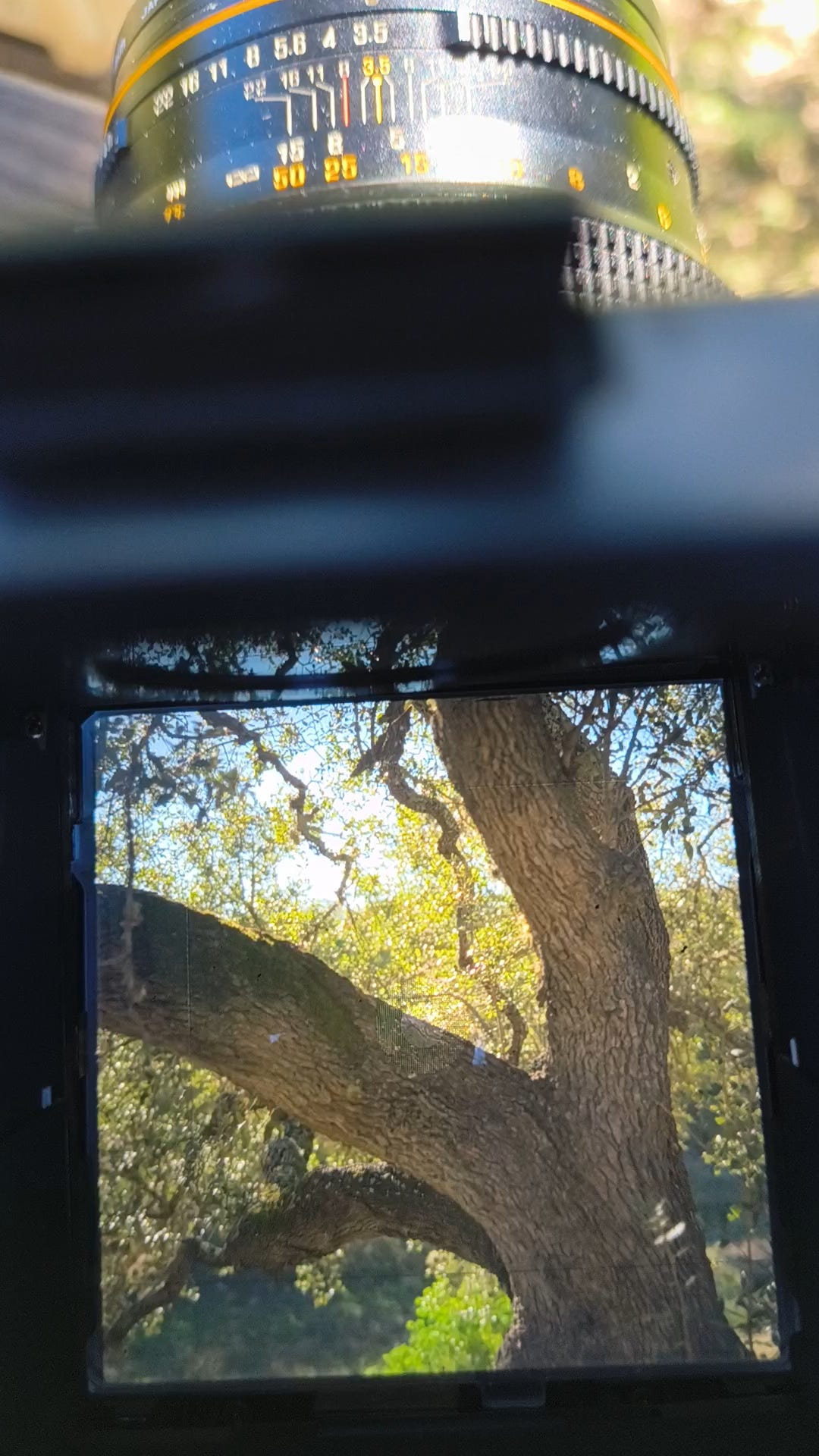
Recently I got a tiny little Micro 110 and a Bronica SQ-A, which I love. I love a waist-level finder. I love medium format photography.
It should not surprise me that I’m coming back to full analog even as I use digital tools and love them. I want options. I want everyone to have options.
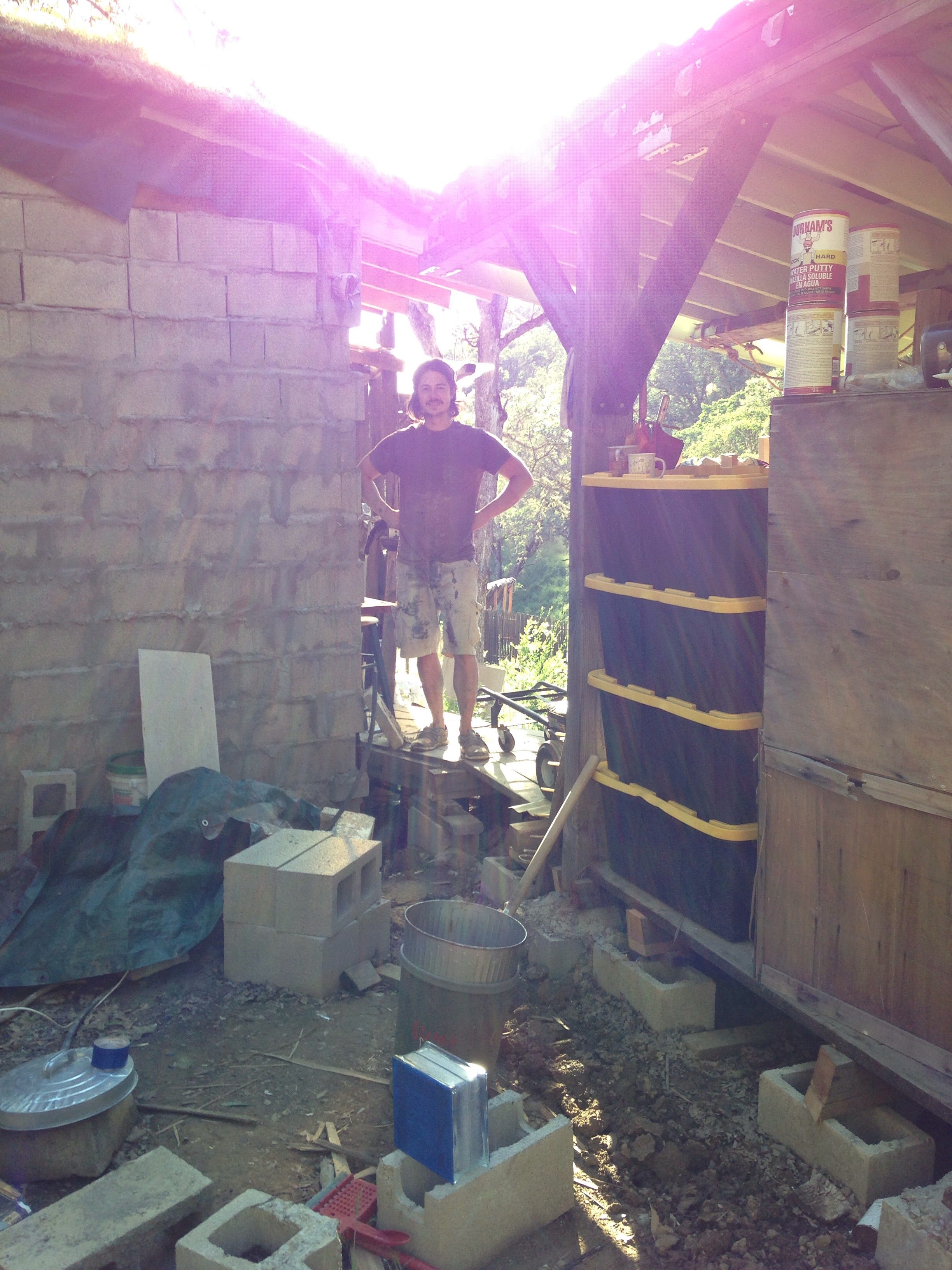
It shouldn’t surprise me, because I spent years digging an off-grid house.
Analog fits so well with a tactile creative process. It’s funny to reflect on how living with a smartphone’s capabilities left me completely uninspired about photography. Plenty of people do great things with their smartphone cameras, yet those little glass rectangles leave me completely uninterested. Using a film camera, the device feels better in the hand, and it’s all about composition. With a waist-level finder you glance down instead of face-planting the camera, and the viewfinder image is reversed. The whole thing is done by feel.
The secret sauce is perceiving qualities
Suppose you find yourself at a wine tasting, or as we did recently at Two Hives, an olive oil and honey tasting.
My favorite thing with any tasting is actually the wheel of terms they hand you for describing what you’re experiencing.
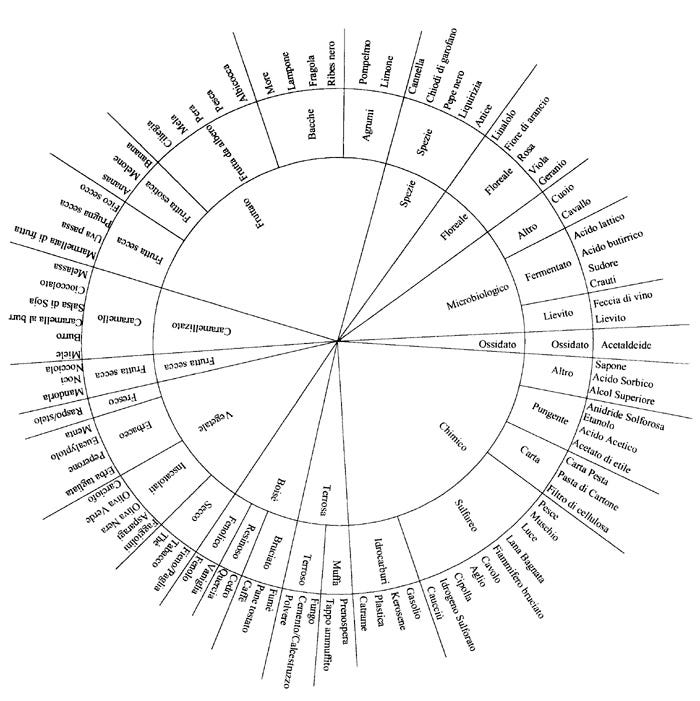
I have no sommelier certification, but I do have my perceiver’s license.
The wheel isn’t there so you can point to it and say “that’s what this is” in any reductive way, or to validate that your experience is the same one as the institutional standard, but to stimulate the ability to actually be present to what you are experiencing. Not to change what you prefer, but through the ordinary challenges of actual experience, bring more presence to what happens.
“It’s grassy, with a bit of canine urine, and saccharine on the mid-palate.”
Typewriters, again
The same wheel of qualities might work for tools.
Making marks at the machine is restorative.
After working all day on a computer, the last thing I feel like doing is working more on a computer. Yet I can go over and stand and work at a typewriter (I prefer standing) and find it energizing. It draws from a completely different well, a clearer one, like standing on the beach feeling the ocean breeze at night.
Something about its tactility, its analog feel, the qualities of keypress and ink from the ribbon, and the momentum and sound, and the carriage’s whoosh.
A typewriter’s appeal isn’t that it’s less usable. It’s that it still works perfectly for what it does. That’s not true for an old digital device. Nobody would prefer an old-ass graphics card or hard drive outside the novelty of it. But an old camera is still as good as it ever was.
Sure, quality matters. But the qualities matter more. They impart the texture of lived experience.
If that sounds airy-fairy, I’m surprised you’ve read this far, so I’ll keep going.
I’m not nostalgic for a bygone time. Digital devices and the latest tech can bring their own satisfaction depending on how they work, whether they’re intuitive and solid, whether you truly own the application, whether you can customize it and make it your own.
I write in a text editor first released in 1976. It has never once interrupted me with a pitch.
Typewriter Games
Amid typewriter events and other experiments this summer, I have been working on a new book, Typewriter Games: An Activity Book and Field Guide to the Page.
The book is now typeset. The aspiration is activity book, like Joe Leeming’s 1950s pencil-and-paper games books meets Black Mountain, Fluxus, and Queneau. The cover, by Rachel Kelli, takes things far from the knee-jerk typewriter aesthetic (no distressed Courier or sepia), as does my own Spacebar Press interior.
It will be out soon. Stay tuned.
Online writing group
Once a month I host a free two-hour writing session. The idea is to have time to write in the company of other people without having to leave your house. You can write using whatever you like, but the advice is to use whatever device is the slowest or feels the best. For the first fifteen minutes we say hi, then write for an hour and a half, and at the end reconvene to say how it all went.
Join the online writing group.
How I feel about Google Maps
Completely unprompted during a drive one day, it came over my speakers full-volume with a pitch for all that Gemini could optimize for me.
No thanks.